Software with an audience of one.
Software fitted to one business was always possible and almost never worth paying for. So you bought something built for the average of ten thousand instead, and bent your process to fit. Building got cheap enough to change that.
Four problems, and what I built for each of them.
- Customers going quiet on a food distributor’s order book
- Clients that cost more than they pay on a managed IT book
- Work not worth quoting on a mechanical contractor’s bid log
- Capacity you pay for and nobody uses on a downtown parking garage
Strategy, then the system that carries it out.
Caspase is a business consulting company that builds AI software for its clients. It does the strategy work, then builds the system that carries it out. What the client keeps is working software, at a fraction of what that used to cost.
One person does both halves. Software only fits a business if whoever builds it understands how that business actually runs, and working that out is the strategy half of the job.
I learned this by building the tool I run my own business on.
Morra keeps every relationship and opportunity in one place, drafts the follow-ups, and works out who to talk to next. It took eight months. It was never a product and it is not for sale.
Contract a build
Something you or your team needs made real. I will scope it, price it, and ship it.
What I have built.
I built each of these in a day, on invented data, knowing nothing about the industry. Anyone can do that now, and so can your competition. The version that helps you would take a month and start from your own numbers.

Going Quiet
For any business with repeat customers
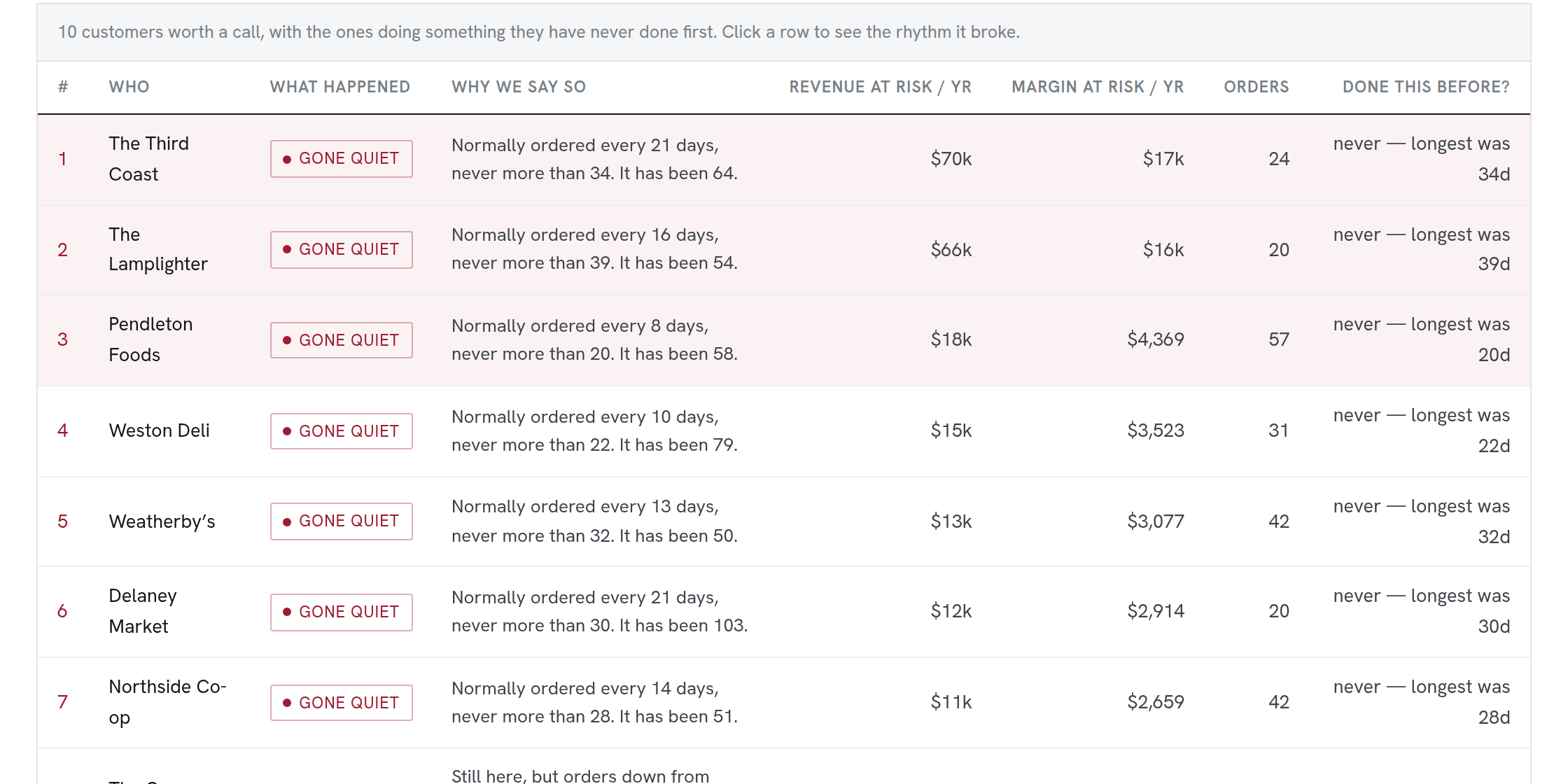
Customers stop ordering without cancelling, and it reaches the monthly numbers a season after it happened. This measures every customer against their own ordering rhythm, lists who to call this week, and says how often it gets that wrong.
Sample data loaded. Or drop in your own CSV — it never leaves your browser.

Underwater
For service businesses on fixed monthly fees
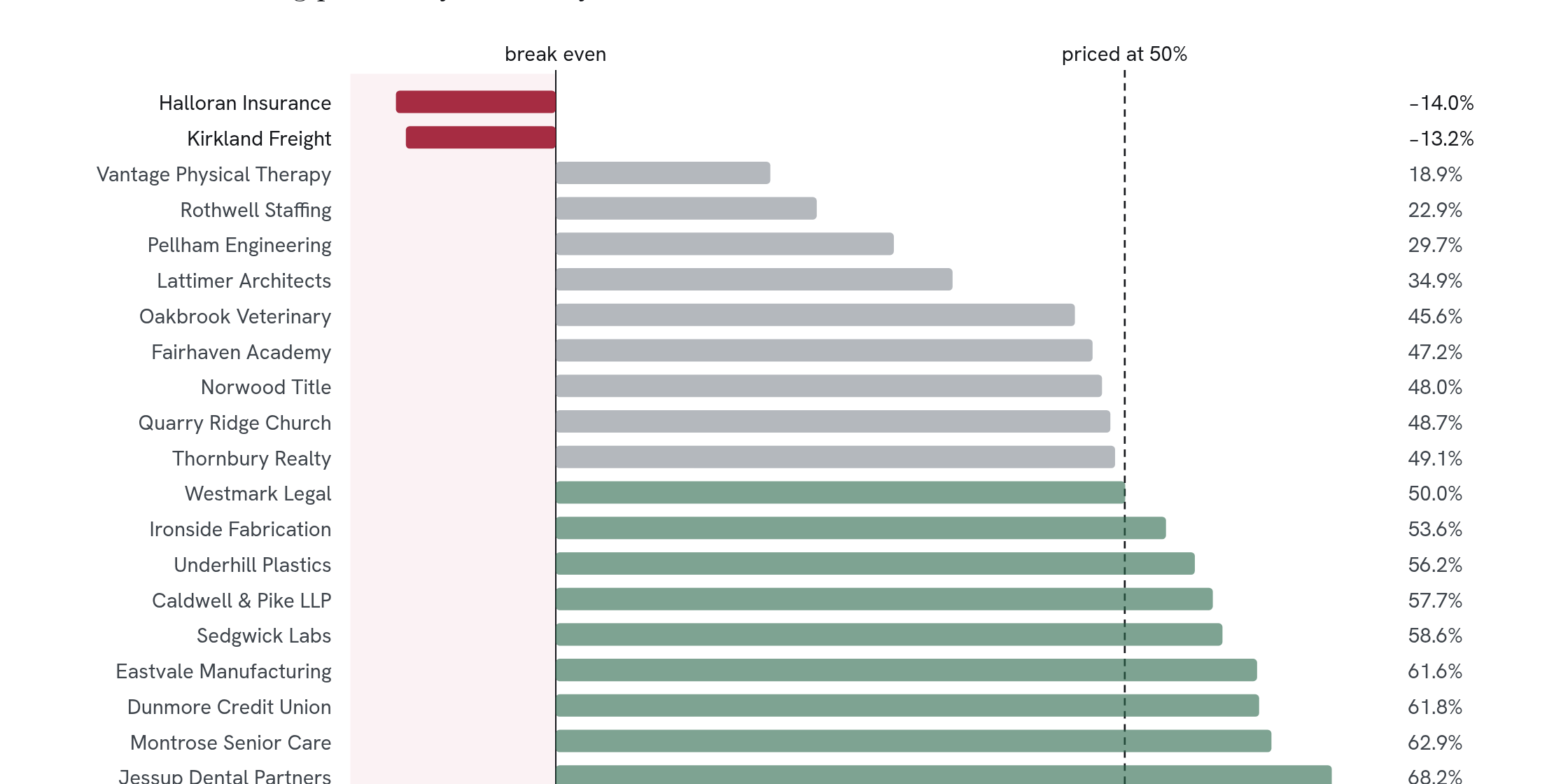
Some agreements take far more work than they pay for, and the profitable clients cover them, so the P&L looks fine. This puts a delivered cost against every agreement and shows which are losing money and when the price can actually move.
Sample data loaded. Or drop in your own CSV — it never leaves your browser.

No Bid
For subcontractors who bid to general contractors
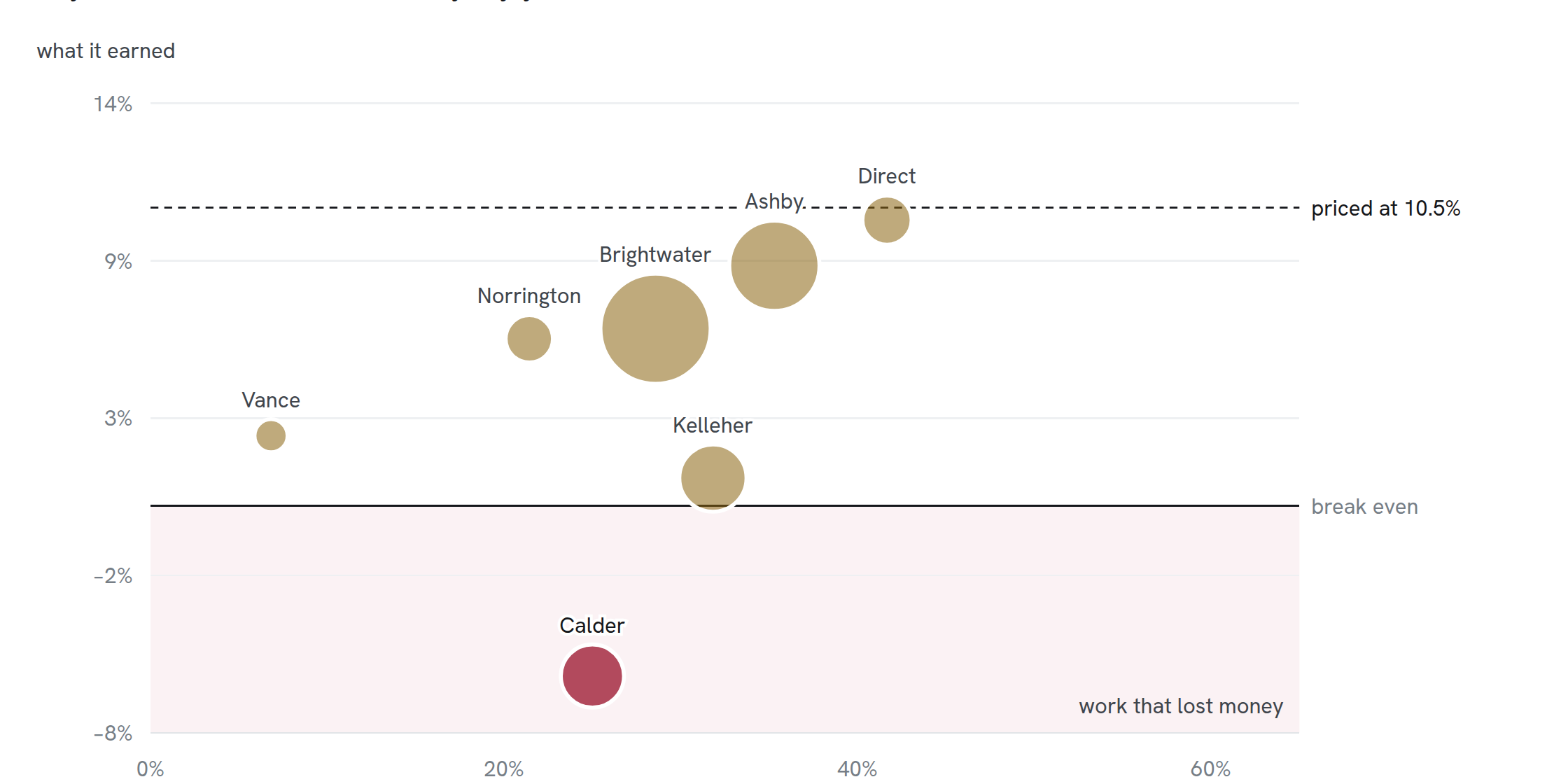
Estimating time goes to whichever invitation arrived first, and nobody tracks which contractors award work or which of that work made money once it was built. This reads the bid log and ranks this week's invitations by what an estimating hour is worth on each.
Sample data loaded. Or drop in your own CSV — it never leaves your browser.

Tuesday Peak
For parking operators and building owners
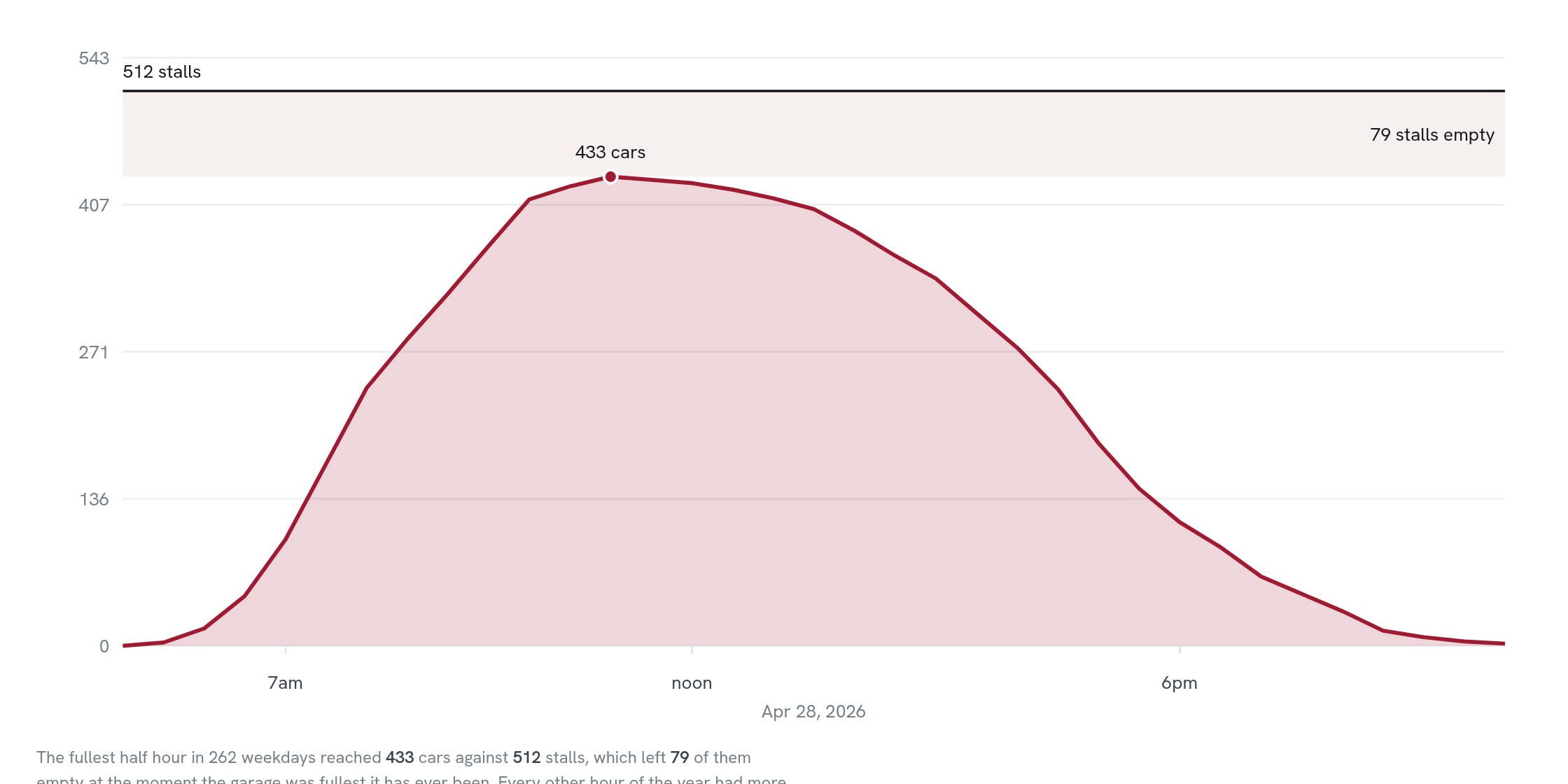
Monthly permits are priced for a five-day week that no longer happens, and the garage's own system reports monthly averages, so nobody has counted the peak. This reads the gate log: what the busiest half hour of the year actually was, how many more permits fit before anyone is turned away, and who is paying every month and never turning up.
Sample data loaded. Or drop in your own CSV — it never leaves your browser.
Morra
Not a demonstration, and not for sale.
A private business system built for one user. It keeps every relationship and opportunity in one place, drafts the follow-ups, and works out who to talk to next.
There is no sample-data version of it and there is not going to be. It holds real names and real correspondence, and it is where I found out what a system fitted to one business costs to build and to keep running. The demonstrations above took a day each. This one took eight months.
- Audience
- One
- Build time
- Eight months
- Form
- Agentic system
- Status
- Runs every day
How the work goes.
Short engagements that end with working software.
Find the question, then build the answer.
Most engagements start with a conversation about something that is costing you money or attention, and end with software that handles it. The part in between is working out what the real question is.
Then it gets built. Small, fitted to how you already work, and handed over. You keep the software, the accounts it runs on, and the ability to have someone else change it later.
What you keep.
Working software. Scope and price are set per engagement, in writing, before anything starts. I will tell you when something is not worth building.
Who it is for.
The client is not qualified by size, headcount or industry. What matters is that somebody can describe what is going wrong in plain words and has the authority to act on the answer.
Owen Cosans
Commercial strategy first, then software. Since January I have built five pieces of software, one of which I run my own business on every day.
I do the strategy work myself and I write the code myself. Caspase LLC was formed in September 2026.
Get in touch.
Tell me what needs building. I will scope it, price it, and ship it.
What happens next.
I reply to these myself. A short conversation about what is going wrong, then a written scope and price before any work starts. If I think something is not worth building, I will say so.